Laibach is a Slovenian avant-garde music group associated with industrial, martial, and neoclassical genres. Formed in 1980 in the mining town of Trbovlje, Slovenia, then part of the Socialist Republic of Slovenia within Yugoslavia, Laibach represents the musical branch of the Neue Slowenische Kunst (NSK) art collective, which the group co-founded in 1984.
From its early years, Laibach attracted controversy due to its use of imagery incorporating parody and pastiche of elements associated with totalitarianism, nationalism, and militarism. These themes have remained central to the group's artistic approach throughout its career. The band was censored in Yugoslavia, where it gained a dissident reputation and a cult following, while also attracting attention internationally through tours in Europe and beyond. Following Slovenia's independence in 1991, Laibach's position in the country shifted from rejection by parts of the public to recognition as a significant cultural institution.
Laibach's early recordings were primarily influenced by industrial music, featuring heavy rhythms and harsh vocals. During the mid-1980s, their sound expanded to incorporate elements of pop music, classical music, and electronic experimentation. The group's lyrics, written in Slovene, German, and English, are often delivered in the deep bass voice of vocalist Milan Fras. Early themes focused on war and military subjects, while later works addressed broader political and social issues through deliberately ambiguous messages. The group is also known for numerous cover versions of popular songs, often transforming lighter material into darker, more dramatic arrangements.
The group has experienced numerous line-up changes. The best-known line-up consists of Milan Fras (vocals), Dejan Knez (bass guitar, keyboards, drums), Ervin Markošek (drums, keyboards, electronics), and Ivan "Jani" Novak (stage effects). Laibach has collaborated with numerous musicians and artists and has produced music for films and theatre productions, as well as visual art projects and side projects by individual members.
Laibach was developed from the band Salto Mortale, formed by Dejan Knez in 1978 in Trbovlje. The group officially formed on 1 June 1980, selecting the date because it was the town's official holiday commemorating the 1924 clashes between Trbovlje workers and the Organization of Yugoslav Nationalists. The name Laibach was suggested by Knez's father, painter Janez Knez, and refers to the German name for Ljubljana, the capital of Slovenia. The name had historical associations with the period of Austrian rule and the Second World War occupation of Yugoslavia.
During its early period, the band members did not publicly reveal their names. The initial line-up consisted of Dejan Knez, Tomaž Hostnik, Ivan "Jani" Novak, Andrej Lupinc, Srećko Bajda, Marko Košnik, and Marjan Benčina. The members later stated that the group's formation was influenced by the death of Joy Division vocalist Ian Curtis, the death of Yugoslav leader Josip Broz Tito, and the beginning of Yugoslavia's political decline.
The band's first major project was the multimedia work "Rdeči revirji" ("Red District"), intended as a challenge to political authorities in Trbovlje. The project was cancelled after authorities objected to the group's use of Kazimir Malevich's black cross imagery.
Laibach's first public performance and an exhibition titled "Žrtve letalske nesreče" ("Victims of an Air Accident") took place in January 1982 at the FV club in Ljubljana. Further performances followed in Zagreb and Belgrade. The group's concerts incorporated self-built electronic instruments, radio equipment, gramophones, and military smoke bombs rather than conventional theatrical effects. These performances attracted attention for their aggressive industrial sound and provocative visual style, which included mining symbols and later incorporated imagery such as the Triglav mountain symbol, deer antlers, and the Malevich black cross surrounded by a gear.
The group's name and imagery generated controversy in Yugoslavia, with some observers interpreting them as references to German occupation during the Second World War. At the Novi rock festival in Ljubljana on 10 September 1982, vocalist Tomaž Hostnik performed wearing a military uniform and completed the performance despite being injured after being struck by a bottle.
On 11 December 1982, Laibach performed the piece "Dotik zla" ("Touch of Evil") at the YU Rock Moment festival in Zagreb. It was Hostnik's final performance with the group. Ten days later, he died by suicide. Laibach later stated their disapproval of his actions and symbolically expelled him from the group, although they continued to reference him and dedicate works to his memory.
Following a period of renewed activity in 1983, Laibach continued to attract controversy. A performance at the Zagreb Biennale titled "Mi kujemo bodočnost" ("We Forge the Future") combined projections of the propaganda film "Revolucija še traja" ("The Revolution is Still Going On") with pornographic imagery, leading to intervention by police and the removal of the band from the stage.
The group published its manifesto "Akcija v imenu" ("Action in the Name Of") in the magazine Nova revija in 1983. The text referenced statements by Joseph Stalin and Adolf Hitler concerning art and ideology. Later that year, Laibach appeared on the television programme "TV tednik" ("TV Weekly"), wearing military-style uniforms and armbands featuring black crosses. The appearance resulted in public criticism and an official ban preventing the group from using the name Laibach on recordings and live performances in Slovenia.
In 1983, Laibach and the English groups Last Few Days and 23 Skidoo undertook the Occupied Europe Tour, performing across Western Europe and Eastern Bloc countries. The tour increased the group's international visibility, with media attention focusing on their combination of socialist realism, fascist imagery, and Italian futurist influences.
In 1984, Laibach members moved to the United Kingdom, where they worked various jobs and appeared as extras in Stanley Kubrick's film "Full Metal Jacket". Through the Belgian label L.A.Y.L.A.H. Antirecords, they released their first record, a 12-inch single containing the Slovene-language songs "Boji" ("Fights"), "Sila" ("Force"), and "Brat moj" ("My Brother"). The group also appeared on the compilation album "World National Anthems" with their version of the Yugoslav national anthem "Hej, Sloveni".
On 7 October 1984, Laibach officially founded the Neue Slowenische Kunst collective together with the visual arts group IRWIN and theatre groups Scipion Nasice Sisters and Rdeči Pilot. Other groups later joined the collective, including Novi kolektivizam, Graditelji, Retrovizija, and the Odeljenje za čisto in praktično filozofijo group.
Laibach released their debut studio album "Laibach" in 1985 through the Ljubljana Students' Cultural Center label Ropot. Due to the continuing ban on the group's name, the album cover featured only the group's black cross symbol. The same year, the German label WUS released the compilation album "Rekapitulacija 1980–1984" ("Recapitulation 1980–1984"), and the live album "Neu Konservatiw" was released from a performance at the Neu Konservatiw festival in Hamburg.
In 1986, Laibach premiered the theatre production "Krst pod Triglavom" ("Baptism Under Triglav") with the Scipion Nasice Sisters Theatre at Ljubljana's Cankar Hall. The group also released the album "Nova Akropola" ("The New Acropolis") through Cherry Red Records. The ban on the use of the name Laibach was lifted in April 1985, and the group subsequently performed legally under the name Laibach in Slovenia.
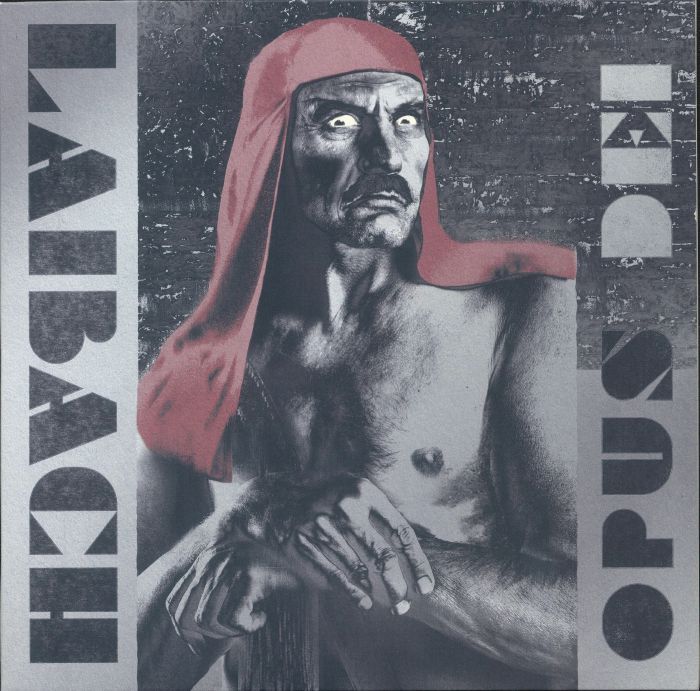
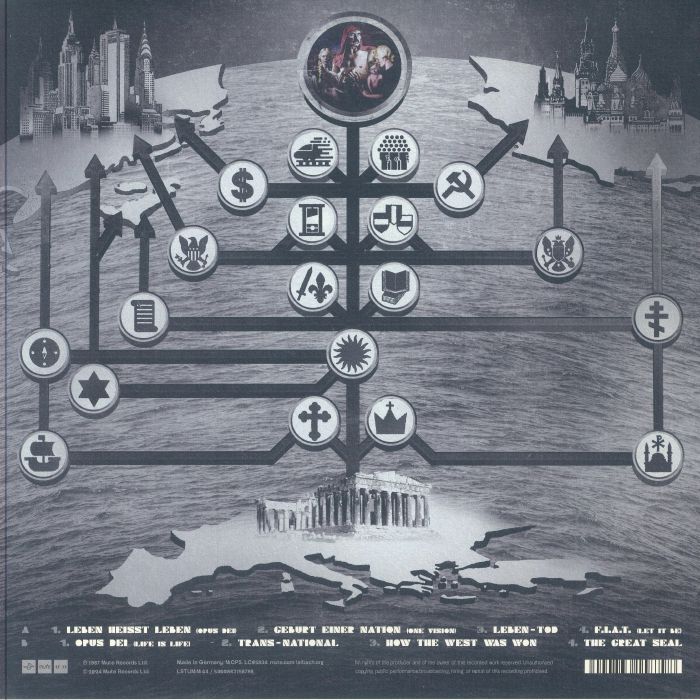
After signing with Mute Records, Laibach released the album "Opus Dei" in 1987. The album included cover versions such as "Life Is Life", based on Opus' song "Live Is Life", and "Geburt einer Nation" ("Birth of a Nation"), based on Queen's "One Vision". The group toured internationally, performing in Europe and the United States and continuing to combine music with theatrical imagery and political symbolism.
In 1988, Laibach released "Let It Be", an album consisting mainly of cover versions of songs from The Beatles album of the same name. In 1989, the group toured North America and later returned to Yugoslavia for further performances. In 1990, they released "Sympathy for the Devil", an album featuring different interpretations of the Rolling Stones song of the same title.
Following Slovenia's independence, Laibach released "Kapital" in 1992, an album examining materialism and contemporary society. The same year, the group announced the State of NSK, an artistic project featuring its own symbols, including a flag, currency, stamps, and passports. In 1994, they released "NATO", an album addressing political developments in Eastern Europe, the former Yugoslavia, and NATO intervention, incorporating cover versions such as Europe's "The Final Countdown" and Bolland & Bolland's "In the Army Now".
The album "Jesus Christ Superstars" was released in 1996 and featured Laibach's interpretation of Andrew Lloyd Webber's rock opera "Jesus Christ Superstar". In 1997, the group performed with the Slovenian Symphony Orchestra and the Tone Tomšič Choir in Ljubljana, presenting orchestral arrangements of early Laibach material.
In 2003, Laibach released the album "WAT", with the title representing the acronym "We Are Time". The album included the song "Tanz mit Laibach" ("Dance with Laibach"). That year, founding member Dejan Knez left the group. In 2004, the band released the compilation album "Anthems" and two DVD releases, "Laibach" and "2".
In 2006, Laibach released "Volk", an album featuring interpretations of national anthems, including their version of "Das Lied der Deutschen". In 2008, they released "Laibachkunstderfuge", featuring their interpretation of Johann Sebastian Bach's "The Art of Fugue".
In 2012, Laibach composed music for the science fiction comedy film "Iron Sky", with the material released on the soundtrack album "Iron Sky". The group also released the live album "Monumental Retro-Avant-Garde" following a performance at the Tate Modern in London.
The album "Spectre" was released in 2014 and addressed political activism and contemporary social issues. In 2015, Laibach performed in Pyongyang, North Korea, becoming the first Western band to perform there, although later reports noted that this description was inaccurate. The performances were documented in the 2016 film "Liberation Day". In 2017, the group performed in South Korea.
In 2017, Laibach released "Also Sprach Zarathustra", originally composed for a theatre production based on Friedrich Nietzsche's novel of the same name. In 2018, the group released "The Sound of Music", featuring their versions of songs from the film of the same title.
In 2020, Laibach released the box set "Revisited", containing reworked versions of early material, live recordings, and archival recordings. The 2021 live album "We Forge the Future – Live at Reina Sofia" documented a performance dedicated to their 1983 Zagreb Biennale appearance.
In 2022, Laibach released "Wir sind das Volk (ein Musical aus Deutschland)" ("We are the People (a Musical of Germany)"), based on a theatre production using texts by Heiner Müller. The group also premiered the symphonic work "Alamut", based on Vladimir Bartol's 1938 novel "Alamut".
In 2023, a planned concert in Kyiv was cancelled after controversy surrounding the band's description of the Russo-Ukrainian War as a proxy war. That year, Laibach released the album "Sketches from the Red District" and the EP "Love Is Still Alive", featuring music written for the film "Iron Sky: The Coming Race".
In 2024, Laibach released several singles, including a cover version of Billie Holiday's "Strange Fruit", a cover of "White Christmas" recorded with the Slovenian electronic duo Silence, and a Slovene-language version of Bijelo Dugme's song "Top" titled "S topom te bom ciljal moja mala" ("I Will Shoot You With a Cannon, Baby").
On 23 October 2025, Laibach released the single "Yom Kippur", featuring the Palestinian Children's Choir.
Full Wikipedia article: https://en.wikipedia.org/wiki/Laibach
Studio albums
Laibach (1985)
Nova Akropola (1986)
Opus Dei (1987)
Krst pod Triglavom – Baptism (1987)
Let It Be (1988)
Macbeth (1989)
Sympathy for the Devil (1990)
Kapital (1992)
NATO (1994)
Jesus Christ Superstars (1996)
WAT (2003)
Volk (2006)
Laibachkunstderfuge (2008)
Iron Sky – The Original Soundtrack (2012)
Iron Sky Director's Cut (2013)
Spectre (2014)
Also Sprach Zarathustra (2017)
The Sound of Music (2018)
Wir sind das Volk (Ein Musical aus Deutschland) (2022)
Sketches of the Red Districts (2023)
Opus Dei Revisited (2024)
Alamut (2025)
Musick (2026)
Read more on Last.fm. User-contributed text is available under the Creative Commons By-SA License; additional terms may apply.